
Most deals are won or lost in follow-up—not the first email. Yet reps either over-follow-up annoyingly or give up after one touch. AI for sales follow-up strategy uses receptivity scoring, engagement signals, and tier-based cadences so follow-ups are timed, relevant, and personalized—not desperate.
This guide covers follow-up frameworks, AI-driven timing, and how tier scores inform when and how to persist.
Related: how AI improves email reply rates, how to improve reply rates, AI outreach preparation guide, and why sales outreach fails.
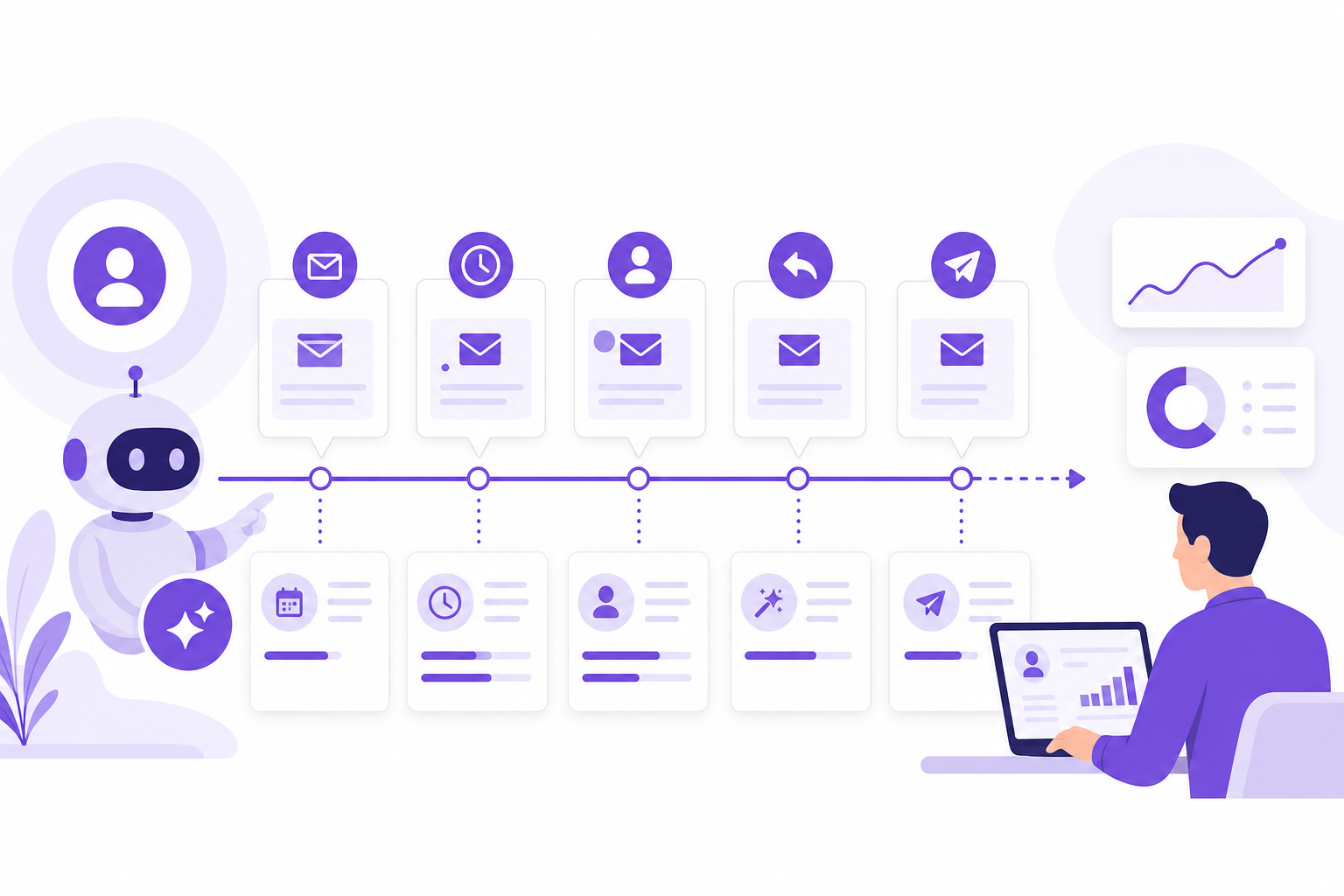
Why Follow-Up Fails Without Strategy
- Same template sent 5 times with no new value
- No distinction between Tier A and Tier D persistence
- Follow-up timing ignores engagement signals
- Reps follow up on unverified or wrong-fit contacts
- No exit criteria—sequences run indefinitely
AI-Informed Follow-Up Framework
Tier A (ICP 80+, High Receptivity)
5–7 touch cadence over 3 weeks. Multi-channel: email + call + LinkedIn. Each follow-up adds new value—a case study, trigger update, or question.
Tier B (ICP 60–79)
3–4 email touches over 2 weeks. Lighter personalization. Exit after no engagement; move to quarterly nurture.
Tier C (ICP 40–59)
Automated nurture only—no cold calls. Re-score quarterly; promote if receptivity rises.
Tier D (Below 40)
No follow-up. Disqualify and remove from active sequences.
Follow-Up Cadence Template
| Touch | Day | Channel | Content Strategy |
|---|---|---|---|
| 1 | 0 | ICP fit reason + value prop | |
| 2 | 3 | Call + voicemail | Reference email; one question |
| 3 | 7 | New angle—case study or trigger | |
| 4 | 12 | Connect + short note | |
| 5 | 18 | Breakup or value-add final touch |
How AI Improves Follow-Up Decisions
- Receptivity score — prioritize follow-up on high-receptivity accounts
- Score reasons — each follow-up references a different fit signal
- Tier routing — cadence intensity matches account priority
- Fresh batches — re-run workflows for new Tier A instead of over-pursuing cold Tier B
How Adsaga.ai Supports Follow-Up Strategy
- Create configuration (
/workflow/config/create) — ICP defines who gets aggressive follow-up - Run workflow (
/workflow/workflows) — Receptivity score guides cadence intensity - View tiered leads — Tier A = 5–7 touches; Tier B = 3–4; C/D = nurture or exit
- Re-run weekly — fresh Tier A prospects instead of endless follow-up on cold accounts
Frequently Asked Questions
How does AI improve sales follow-up?
AI provides receptivity scores and tier ratings that determine follow-up intensity—so reps persist on high-potential accounts and exit low-fit ones early.
How many follow-ups should B2B outreach include?
5–7 touches for Tier A over 3 weeks. 3–4 for Tier B. Never more than 7 without engagement—move to nurture instead.
Should follow-ups be personalized?
Each follow-up should add new value—a different angle, case study, or trigger update. Never "just bumping this to the top of your inbox."
When should you stop following up?
After 5–7 touches with no engagement on Tier A, or 3–4 on Tier B. Move to quarterly nurture. Do not follow up on Tier D.
How does Adsaga.ai inform follow-up?
Receptivity scores and tier ratings tell reps which accounts deserve aggressive follow-up vs. nurture—and provide fresh score reasons for each touch.
Final Thoughts
AI for sales follow-up strategy is about persistence with intelligence—not volume without relevance. Tier your cadences, add value each touch, and exit early on low-fit accounts.
Try Adsaga.ai — receptivity scores that guide follow-up intensity.