
The chemical manufacturing industry is highly competitive. Whether you produce specialty chemicals, industrial chemicals, agrochemicals, water treatment chemicals, adhesives, coatings, resins, or pharmaceutical intermediates, one challenge remains the same: finding consistent, qualified B2B buyers.
Many chemical manufacturers still depend on trade shows, distributors, referrals, or B2B marketplaces. While these channels can generate business, they are often unpredictable and difficult to scale.
Today, leading chemical companies are using AI-powered lead generation to identify ideal customers, connect with procurement teams, and create a predictable sales pipeline.
Effective lead generation for chemical manufacturers starts with knowing who needs your products—and who signs off on supplier contracts. In this complete 2026 guide, you'll discover proven strategies to generate qualified leads, improve sales efficiency, and grow your chemical manufacturing business.
For foundational concepts, see our guides on B2B lead generation, ICP identification, and finding decision-makers.
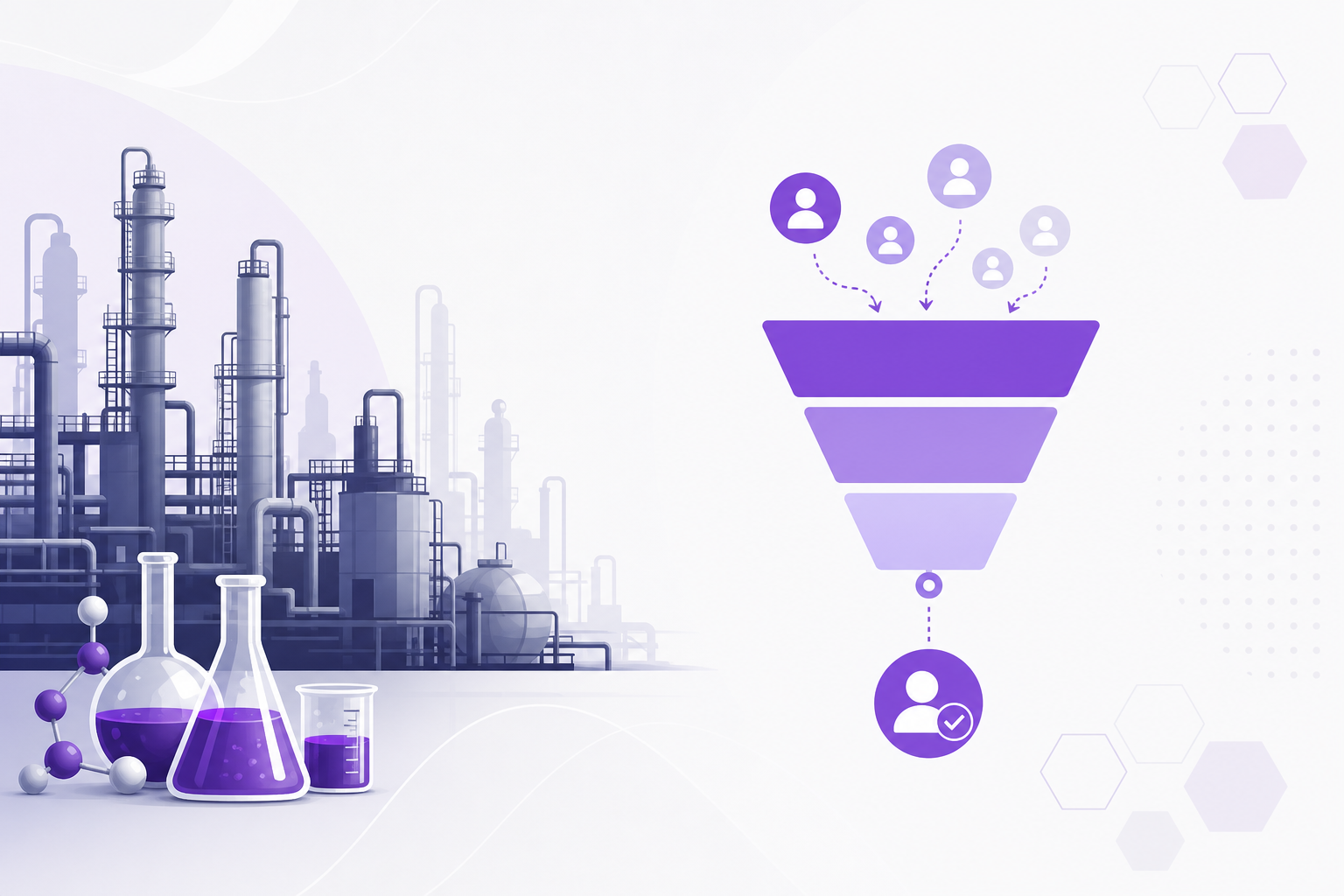
Why Lead Generation Is Challenging for Chemical Manufacturers
Chemical manufacturers primarily sell to businesses rather than individual consumers.
Your ideal customers may include:
- Pharmaceutical companies
- Paint and coating manufacturers
- Textile manufacturers
- Food processing companies
- Water treatment companies
- Plastic manufacturers
- Automotive suppliers
- Construction material manufacturers
- Cosmetic manufacturers
- Industrial equipment companies
The biggest challenge isn't finding businesses—it's identifying companies that actually require your products and reaching the people responsible for purchasing them.
Common Challenges Chemical Manufacturers Face
Many chemical companies struggle because they:
- Depend heavily on referrals and distributors
- Purchase outdated contact databases
- Spend hours manually researching companies
- Contact the wrong decision-makers
- Send generic sales emails with poor response rates
- Wait for inbound inquiries instead of generating demand proactively
As a result, sales teams waste valuable time on prospects that never convert.
What Makes a High-Quality Chemical Industry Lead?
A qualified lead includes much more than a company name. The best B2B leads contain:
- Company profile
- Industry segment
- Products manufactured
- Company size
- Annual revenue
- Factory locations
- Decision-maker details
- Verified business email addresses
- LinkedIn profiles
- Product relevance
- Ideal Customer Profile (ICP) score
The more relevant the lead, the greater the chance of closing the sale.
12 Proven Lead Generation Strategies for Chemical Manufacturers
1. Define Your Ideal Customer Profile (ICP)
Before searching for prospects, clearly define your ideal buyer. Consider factors such as:
- Industry
- Product application
- Company size
- Manufacturing capacity
- Geographic location
- Regulatory requirements
- Purchase volume
A clear ICP helps eliminate low-quality leads. Use our ICP identification guide to build yours.
2. Reach the Right Decision-Makers
Instead of sending emails to generic inboxes, focus on professionals such as:
- Purchase Manager
- Procurement Manager
- Sourcing Head
- Supply Chain Manager
- Plant Manager
- Production Manager
- Technical Director
- R&D Manager
- Operations Head
- CEO (for SMEs)
These individuals are directly involved in supplier selection. Learn more in our decision-maker prospecting guide.
3. Focus on High-Potential Industries
Many industries regularly purchase industrial chemicals. Some of the most promising sectors include:
- Pharmaceuticals
- Paints & Coatings
- Plastics
- Rubber
- Food Processing
- Agriculture
- Textiles
- Personal Care
- Construction
- Water Treatment
Targeting these industries increases lead quality and conversion rates.
4. Use AI to Discover Qualified Prospects
Instead of manually researching thousands of businesses, AI-powered tools can identify companies that closely match your Ideal Customer Profile.
AI helps filter prospects based on:
- Industry
- Products manufactured
- Company size
- Geographic market
- Business relevance
This saves time and improves prospect quality.
5. Personalize Every Outreach Campaign
Industrial buyers receive countless supplier emails. Stand out by mentioning:
- Their products
- Manufacturing processes
- Industry challenges
- Recent company developments
- How your chemicals solve a specific business need
Personalized outreach builds credibility and improves response rates.
6. Segment Your Prospect Lists
Instead of maintaining one large contact database, organize leads into focused categories such as:
- Pharmaceutical manufacturers
- Plastic manufacturers
- Textile companies
- Paint manufacturers
- Water treatment companies
- Food processing businesses
Industry-specific campaigns generate better engagement.
7. Expand Into Export Markets
Many Indian chemical manufacturers have strong export potential. Target buyers in:
- United States
- Germany
- United Kingdom
- UAE
- Canada
- Australia
- Netherlands
- Singapore
- Saudi Arabia
- South Africa
International markets often offer larger business opportunities.
8. Build a Professional Website
Your website should clearly communicate:
- Product portfolio
- Manufacturing capabilities
- Quality certifications
- Industries served
- Technical documentation
- Safety standards
- Laboratory facilities
- Customer success stories
A professional online presence builds trust before sales conversations begin.
9. Publish Educational Content
Technical content attracts buyers actively researching suppliers. Useful content ideas include:
- Chemical application guides
- Industry regulations
- Product comparison articles
- Safety standards
- Manufacturing best practices
- Material compatibility guides
- Sustainability initiatives
- Industry trends
Educational content also improves organic search rankings.
10. Create a Structured Follow-Up Process
Chemical purchasing decisions often involve multiple stakeholders and extended evaluation periods. A strong follow-up process might include:
- Introduction email
- Product catalog
- Technical data sheet
- Case study
- Product sample
- Online meeting
Consistent follow-up significantly increases conversion rates.
11. Track Sales Performance
Monitor important metrics such as:
- Qualified leads generated
- Email open rates
- Reply rates
- Meetings scheduled
- Proposal requests
- Conversion rates
- Revenue generated
Data-driven sales teams consistently outperform competitors.
12. Automate Prospect Research
Manual research slows down business development. AI-powered automation can help:
- Discover target companies
- Identify decision-makers
- Enrich business information
- Score leads
- Match prospects with your ICP
- Prioritize outreach efforts
Automation allows your sales team to focus on building customer relationships.
How AI Is Transforming Lead Generation for Chemical Manufacturers
Artificial Intelligence has changed how B2B sales teams identify and qualify prospects.
Instead of relying on outdated directories, AI can:
- Discover companies that match your target market
- Identify procurement decision-makers
- Analyze company fit
- Prioritize high-value opportunities
- Enrich company profiles
- Reduce manual research time
This results in better lead quality and more productive sales efforts.
How Adsaga.ai Helps Chemical Manufacturers
Adsaga.ai is an AI-powered B2B lead generation platform built to help manufacturers identify qualified business opportunities faster.
Instead of generating generic contact lists, Adsaga.ai analyzes your Ideal Customer Profile and helps discover companies that closely match your target market.
With Adsaga.ai, chemical manufacturers can:
- Find businesses that need their products
- Discover verified decision-makers
- Build highly targeted prospect lists
- Reduce manual research
- Improve lead quality
- Increase sales productivity
Whether you're supplying specialty chemicals, industrial chemicals, pharmaceutical ingredients, water treatment solutions, or chemical raw materials, Adsaga.ai helps your sales team focus on prospects with the highest potential to convert.
Frequently Asked Questions
How do chemical manufacturers find B2B leads?
Define your ICP, target procurement and technical decision-makers in high-potential industries, use verified prospect data, personalize outreach, and follow up consistently across segmented campaigns.
Who are the best decision-makers to contact?
Purchase Managers, Procurement Managers, Sourcing Heads, Supply Chain Managers, Plant Managers, Production Managers, Technical Directors, R&D Managers, Operations Heads, and CEOs at smaller companies.
Can AI help chemical manufacturers generate better leads?
Yes. AI can identify ICP-matched companies, surface procurement decision-makers, score lead quality, and reduce manual research so your team spends more time building customer relationships.
What is the best lead generation strategy for chemical manufacturers?
Combine a clearly defined ICP, procurement-focused targeting, verified B2B data, personalized outreach, and consistent follow-up across industry-specific campaigns.
How can chemical manufacturers generate export leads?
Build regional prospect lists, target buyers in markets like the US, Germany, UAE, and Singapore, and personalize outreach around product applications and compliance needs.
Final Thoughts
Lead generation for chemical manufacturers is no longer about collecting thousands of business contacts. Success comes from identifying companies that genuinely need your products, connecting with the right decision-makers, and delivering relevant, personalized outreach.
Manufacturers that combine AI-powered prospecting with a clearly defined Ideal Customer Profile can consistently generate better leads, shorten sales cycles, and create a predictable pipeline of qualified B2B customers.
If your sales team spends more time searching for prospects than building customer relationships, adopting a smarter lead generation strategy can become a major competitive advantage. Get started with Adsaga.ai or explore more strategies on the Adsaga blog.