
The steel industry is the backbone of construction, infrastructure, automotive, engineering, and manufacturing. Whether you produce steel bars, TMT bars, structural steel, stainless steel, steel coils, sheets, pipes, tubes, or fabricated steel products, one challenge remains the same: finding a consistent pipeline of qualified B2B buyers.
Many steel manufacturers still rely on dealers, distributors, trade exhibitions, referrals, or tender-based opportunities. While these channels generate business, they often make sales unpredictable and difficult to scale.
Today, successful steel manufacturers are adopting AI-powered lead generation to identify qualified buyers, connect with procurement teams, and build a reliable B2B sales pipeline.
Effective lead generation for steel manufacturers starts with knowing which businesses need your products—and who approves supplier contracts. In this complete 2026 guide, you'll learn proven strategies to generate better leads, increase sales opportunities, and grow your steel manufacturing business.
For foundational concepts, see our guides on B2B lead generation, ICP identification, and finding decision-makers.
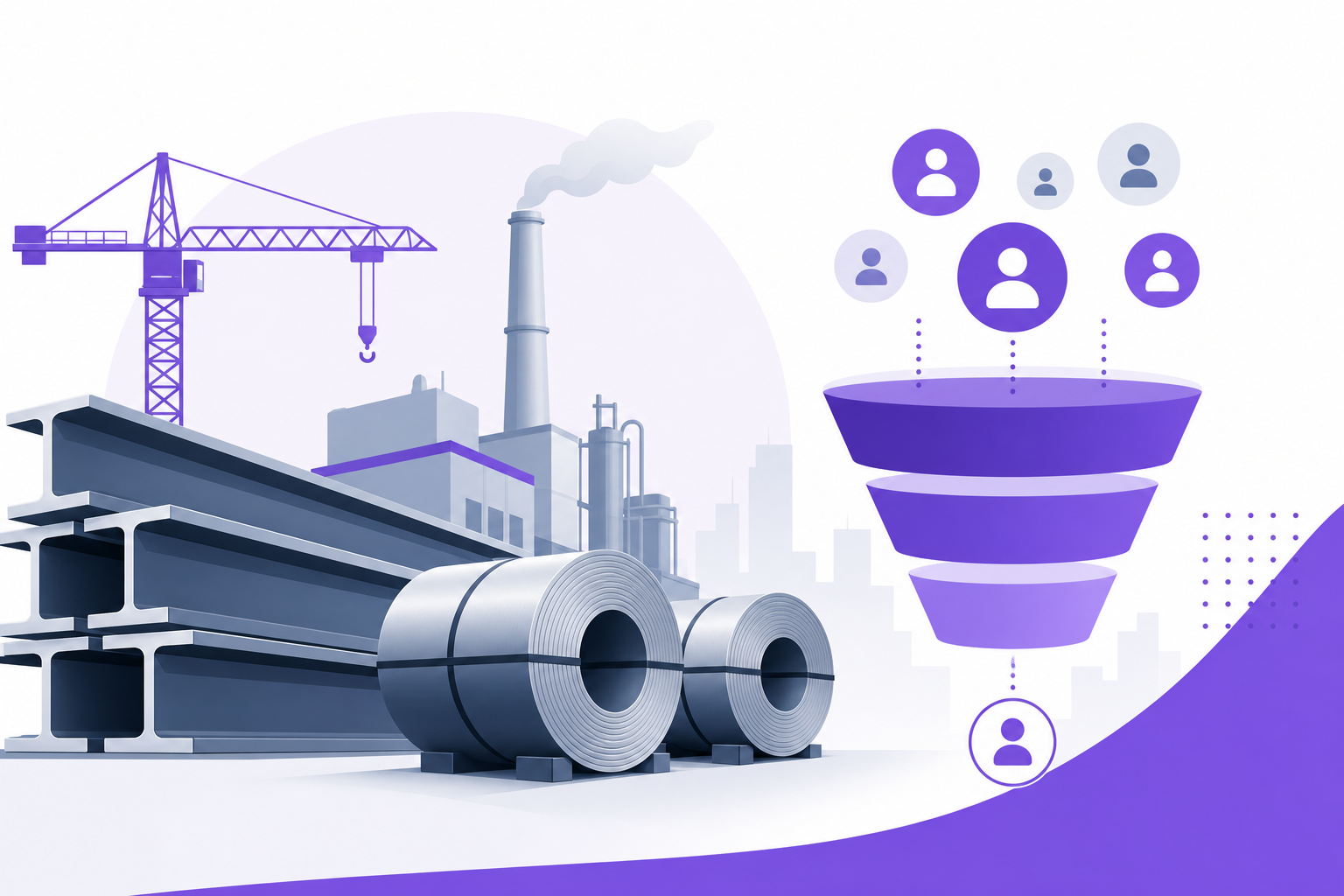
Why Lead Generation Is Challenging for Steel Manufacturers
Steel manufacturers primarily sell to businesses rather than individual consumers.
Your ideal customers may include:
- Construction companies
- Infrastructure contractors
- Fabrication companies
- EPC contractors
- Automotive manufacturers
- Heavy engineering companies
- Industrial equipment manufacturers
- OEMs
- Real estate developers
- Exporters and distributors
The challenge isn't finding companies—it's identifying businesses actively purchasing steel products and reaching the people responsible for supplier selection.
Common Challenges Steel Manufacturers Face
Many steel companies struggle because they:
- Depend heavily on distributors and repeat customers
- Wait for tender opportunities or inbound inquiries
- Purchase outdated business databases
- Spend hours researching companies manually
- Contact generic company email addresses
- Reach the wrong procurement contacts
- Lack a structured B2B lead generation strategy
As a result, sales teams spend more time searching for buyers than closing deals.
What Makes a High-Quality Steel Industry Lead?
A qualified lead includes much more than a company name. The best B2B leads contain:
- Company profile
- Industry segment
- Steel product requirements
- Company size
- Annual revenue
- Factory or project locations
- Decision-maker names
- Verified business email addresses
- LinkedIn profiles
- Purchase relevance
- Ideal Customer Profile (ICP) score
Better lead quality results in higher conversion rates and shorter sales cycles.
12 Proven Lead Generation Strategies for Steel Manufacturers
1. Define Your Ideal Customer Profile (ICP)
Before searching for buyers, define exactly who your ideal customers are. Your ICP should include:
- Industry
- Product requirements
- Company size
- Geographic region
- Project scale
- Purchase frequency
- Annual steel consumption
A clear ICP improves targeting and reduces wasted sales efforts. Use our ICP identification guide to build yours.
2. Reach the Right Decision-Makers
Avoid sending quotations to generic company inboxes. Instead, connect with professionals such as:
- Purchase Manager
- Procurement Manager
- Supply Chain Manager
- Project Procurement Head
- Plant Manager
- Operations Manager
- Engineering Director
- Sourcing Manager
- Factory Head
- CEO or Founder (for SMEs)
These individuals play a key role in selecting steel suppliers. Learn more in our decision-maker prospecting guide.
3. Focus on High-Demand Industries
Many industries require steel products regularly. Target sectors include:
- Construction
- Infrastructure
- Automotive
- Shipbuilding
- Heavy Engineering
- Industrial Machinery
- Oil & Gas
- Renewable Energy
- Railways
- Manufacturing
Industry-specific targeting improves lead quality and campaign performance.
4. Use AI to Discover Qualified Buyers
Rather than manually researching businesses, AI-powered prospecting tools can identify companies that match your Ideal Customer Profile.
AI helps filter prospects based on:
- Industry
- Product demand
- Company size
- Geographic market
- Business relevance
This saves time and improves the quality of your sales pipeline.
5. Personalize Every Sales Email
Industrial buyers receive hundreds of supplier emails every month. Stand out by referencing:
- Their ongoing projects
- Industry challenges
- Steel product requirements
- Supply chain goals
- How your products improve quality, delivery, or cost efficiency
Personalized outreach significantly increases response rates.
6. Segment Your Prospect Lists
Instead of maintaining one large database, organize prospects into groups such as:
- Construction contractors
- Infrastructure companies
- Automotive manufacturers
- Fabrication businesses
- EPC contractors
- Industrial manufacturers
Targeted campaigns consistently generate better engagement.
7. Expand Into Export Markets
Steel manufacturers can significantly increase revenue by exploring international markets. Potential export destinations include:
- United States
- UAE
- Saudi Arabia
- Germany
- United Kingdom
- Canada
- Australia
- Singapore
- South Africa
- Southeast Asia
Export diversification reduces dependency on local markets.
8. Build a Professional Website
Your website should clearly communicate:
- Steel products
- Manufacturing capabilities
- Production capacity
- Certifications
- Industries served
- Project experience
- Quality standards
- Contact information
A professional online presence builds trust before buyers initiate conversations.
9. Publish Educational Content
Content marketing helps attract industrial buyers searching online. Useful content topics include:
- Steel grades explained
- Structural steel applications
- Stainless steel vs carbon steel
- TMT bar selection guide
- Steel fabrication best practices
- Export standards
- Sustainability in steel manufacturing
- Construction industry trends
Educational content strengthens SEO while positioning your company as an industry expert.
10. Create a Structured Follow-Up Process
Large steel purchases often involve multiple discussions and approvals. A strong follow-up process may include:
- Introduction email
- Company profile
- Product catalog
- Technical specifications
- Case studies
- Quotation
- Online meeting
Consistent follow-ups improve conversion rates.
11. Measure Sales Performance
Track key performance indicators such as:
- Qualified leads generated
- Email reply rates
- Meetings booked
- Quotations submitted
- Orders won
- Conversion rate
- Revenue generated
Measuring results helps optimize future campaigns.
12. Automate Prospect Research
Manual prospecting consumes valuable sales resources. AI-powered automation helps:
- Discover target companies
- Identify procurement decision-makers
- Enrich company profiles
- Score lead quality
- Match companies to your ICP
- Prioritize outreach
Automation allows sales teams to spend more time selling and less time researching.
How AI Is Transforming Lead Generation for Steel Manufacturers
Artificial Intelligence is changing the way steel companies identify and qualify business opportunities.
Instead of relying solely on trade directories or exhibitions, AI can:
- Find companies matching your Ideal Customer Profile
- Discover verified procurement decision-makers
- Prioritize high-quality prospects
- Analyze company fit
- Enrich business information
- Reduce manual research
This allows sales teams to build stronger pipelines while improving productivity.
How Adsaga.ai Helps Steel Manufacturers
Adsaga.ai is an AI-powered B2B lead generation platform built to help steel manufacturers identify qualified buyers faster.
Rather than generating generic contact lists, Adsaga.ai analyzes your Ideal Customer Profile and discovers companies that closely match your target market.
With Adsaga.ai, steel manufacturers can:
- Find construction companies, OEMs, EPC contractors, and industrial buyers
- Discover verified procurement decision-makers
- Build highly targeted prospect lists
- Reduce manual research
- Improve outreach quality
- Increase sales productivity
Whether you manufacture TMT bars, structural steel, stainless steel products, coils, sheets, pipes, tubes, fabricated components, or custom steel solutions, Adsaga.ai helps your sales team connect with buyers who are most likely to become long-term customers.
Frequently Asked Questions
How do steel manufacturers find B2B leads?
Define your ICP, target procurement decision-makers in construction, infrastructure, and industrial sectors, use verified prospect data, personalize outreach, and follow up consistently across segmented campaigns.
Who are the best decision-makers to contact?
Purchase Managers, Procurement Managers, Supply Chain Managers, Project Procurement Heads, Plant Managers, Operations Managers, Engineering Directors, Sourcing Managers, Factory Heads, and CEOs or Founders at smaller companies.
What is the best lead generation strategy for steel manufacturers?
Combine a clearly defined ICP, verified procurement targeting, personalized messaging by industry, segmented prospect lists, and consistent follow-up across domestic and export markets.
Can AI help steel manufacturers generate better leads?
Yes. AI can identify companies matching your ICP, surface verified procurement decision-makers, score lead quality, and reduce manual research so your team spends more time closing business.
How can steel manufacturers generate export leads?
Build segmented prospect lists by region, target buyers in markets like the US, UAE, Germany, and Southeast Asia, and personalize outreach around product specifications and certifications.
Final Thoughts
Lead generation for steel manufacturers is no longer about collecting thousands of business contacts. Success comes from identifying companies that genuinely need your products, reaching the right procurement decision-makers, and delivering personalized outreach supported by accurate business data.
Manufacturers that combine AI-powered prospecting with a clearly defined Ideal Customer Profile consistently generate higher-quality leads, shorten sales cycles, and build a predictable pipeline of B2B customers.
If your sales team spends more time researching prospects than closing business, implementing a smarter lead generation strategy can become a significant competitive advantage. Get started with Adsaga.ai or explore more strategies on the Adsaga blog.