
The global textile industry continues to grow, but so does the competition. Whether you export fabrics, garments, home textiles, yarn, denim, knitwear, cotton products, or technical textiles, one challenge remains the same: finding consistent, qualified international buyers.
Many textile exporters still rely on trade fairs, buying agents, B2B marketplaces, and referrals. While these methods can generate business, they are often expensive, unpredictable, and difficult to scale.
Today, successful textile exporters are using AI-powered lead generation to identify ideal buyers, connect with procurement teams, and build a predictable export sales pipeline.
Effective lead generation for textile exporters starts with knowing which international buyers need your products—and who approves supplier partnerships. In this complete 2026 guide, you'll learn proven strategies to generate qualified export leads, increase buyer meetings, and grow your textile export business.
For foundational concepts, see our guides on B2B lead generation, ICP identification, and finding decision-makers.
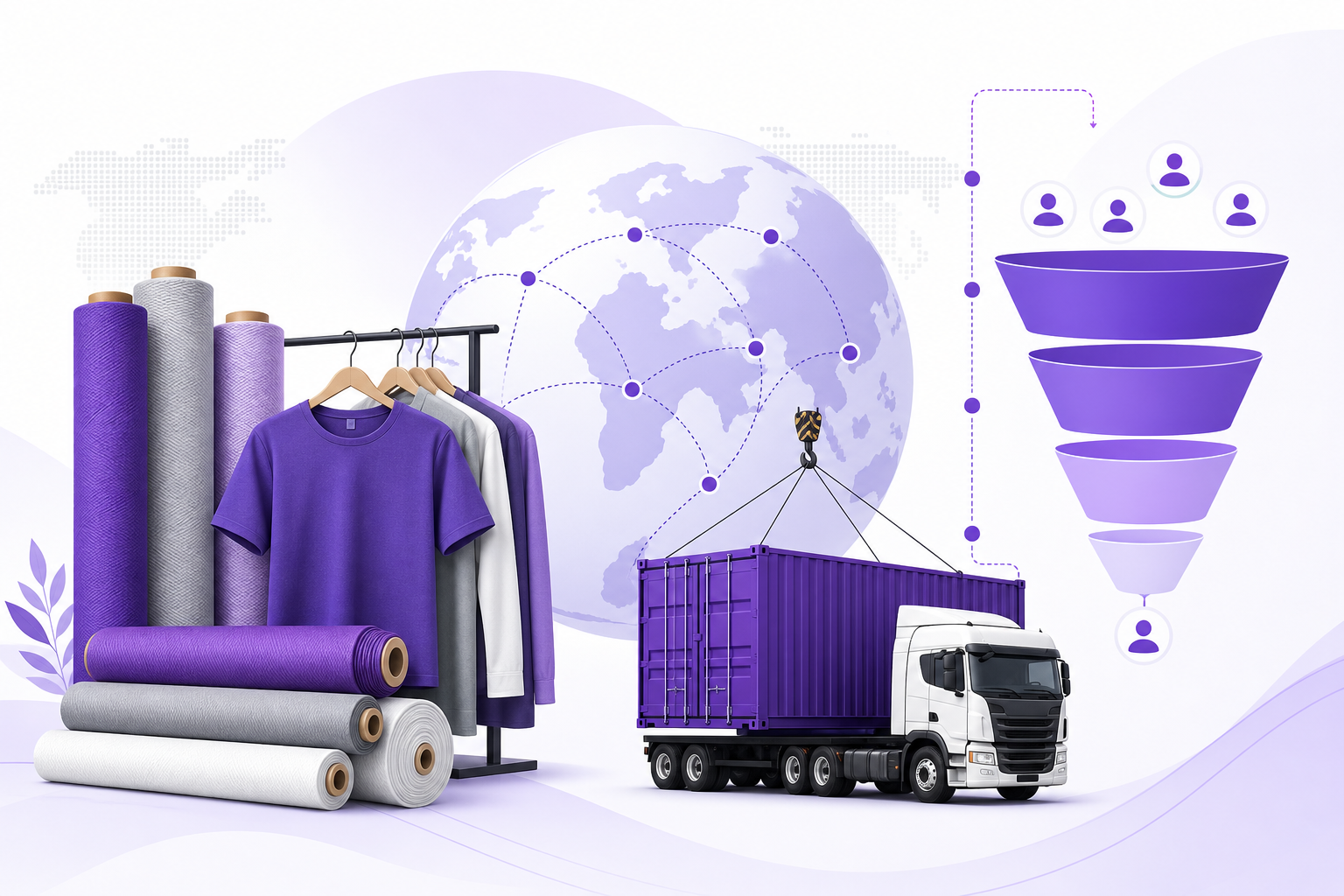
Why Lead Generation Is Challenging for Textile Exporters
Textile exporters primarily sell to businesses across international markets.
Your ideal customers may include:
- Apparel brands
- Fashion retailers
- Clothing manufacturers
- Importers
- Wholesalers
- Distributors
- Private label brands
- Home furnishing companies
- Hotel supply companies
- E-commerce brands
The challenge isn't finding companies—it's identifying businesses actively sourcing textile products and reaching the people responsible for supplier selection.
Common Challenges Textile Exporters Face
Many exporters struggle because they:
- Depend heavily on trade shows and exhibitions
- Wait for inquiries from B2B marketplaces
- Purchase outdated buyer databases
- Spend hours researching overseas companies
- Reach out to generic company email addresses
- Struggle to identify verified decision-makers
- Lack a predictable lead generation process
As a result, sales teams spend more time searching for buyers than closing export deals.
What Makes a High-Quality Textile Export Lead?
A qualified export lead includes far more than a company name. The best B2B leads contain:
- Company profile
- Country
- Product category
- Import activity
- Company size
- Annual revenue
- Decision-maker names
- Business email addresses
- LinkedIn profiles
- Buying relevance
- Ideal Customer Profile (ICP) score
Better data leads to better conversations and higher conversion rates.
12 Proven Lead Generation Strategies for Textile Exporters
1. Define Your Ideal Customer Profile (ICP)
Before searching for buyers, define exactly who you want to sell to. Your ICP may include:
- Product category
- Import volume
- Country
- Company size
- Distribution channel
- Target market
- Retail or wholesale focus
A well-defined ICP helps eliminate low-quality prospects. Use our ICP identification guide to build yours.
2. Connect With Real Decision-Makers
Instead of sending emails to generic addresses, target professionals such as:
- Purchasing Manager
- Procurement Manager
- Sourcing Manager
- Buying Manager
- Category Manager
- Product Development Manager
- Supply Chain Director
- Import Manager
- Operations Director
- Founder or CEO (for SMEs)
These are the people responsible for selecting textile suppliers. Learn more in our decision-maker prospecting guide.
3. Target High-Potential Export Markets
Many international markets continuously source textile products. Some of the best export destinations include:
- United States
- Germany
- United Kingdom
- France
- Italy
- Spain
- Canada
- Australia
- UAE
- Netherlands
Focus your outreach on markets that align with your products and certifications.
4. Use AI to Discover Qualified Buyers
Rather than manually researching thousands of businesses, AI-powered prospecting helps identify buyers that closely match your Ideal Customer Profile.
AI can filter companies based on:
- Industry
- Import relevance
- Geography
- Company size
- Product focus
This reduces manual research and improves lead quality.
5. Personalize Every Sales Email
International buyers receive hundreds of supplier emails. Increase your response rate by mentioning:
- Their product range
- Retail market
- Current sourcing trends
- Sustainability goals
- How your products fit their business
Personalized outreach demonstrates professionalism and builds trust.
6. Segment Buyers by Industry
Instead of one large contact database, organize prospects into categories such as:
- Fashion brands
- Apparel manufacturers
- Home textile importers
- Hotel suppliers
- Retail chains
- E-commerce brands
Industry-specific campaigns consistently perform better.
7. Showcase Your Export Capabilities
International buyers want confidence before placing orders. Highlight:
- Export experience
- Manufacturing capacity
- Certifications
- Compliance standards
- Quality control
- Packaging options
- Logistics support
- Production timelines
Trust plays a major role in export sales.
8. Build a Professional Website
Your website should clearly communicate:
- Product catalog
- Manufacturing capabilities
- Certifications
- Factory information
- Export countries served
- Case studies
- Client testimonials
- Contact information
A strong website increases credibility and improves inquiry conversion.
9. Publish Educational Content
Content marketing helps attract buyers searching online. Consider writing about:
- Textile sourcing guides
- Sustainable fabrics
- Organic cotton
- Manufacturing processes
- Fabric quality standards
- Export regulations
- Fashion industry trends
- Packaging for exports
Educational content improves SEO while positioning your company as an industry expert.
10. Build a Structured Follow-Up Process
Most international buyers don't respond after the first email. A strong follow-up process may include:
- Introduction email
- Product catalog
- Company profile
- Case study
- Product samples
- Virtual meeting invitation
Consistent follow-ups significantly improve conversion rates.
11. Track Your Sales Performance
Measure important KPIs such as:
- Qualified buyers identified
- Email open rates
- Reply rates
- Meetings booked
- Sample requests
- Quotations submitted
- Orders won
Tracking performance helps optimize future campaigns.
12. Automate Buyer Research
Manual buyer research consumes valuable time. AI-powered automation can help:
- Discover international buyers
- Identify decision-makers
- Enrich company profiles
- Score buyer quality
- Match buyers to your ICP
- Prioritize outreach
Automation allows your sales team to focus on closing export deals instead of researching prospects.
How AI Is Transforming Lead Generation for Textile Exporters
Artificial Intelligence has transformed export sales by making prospecting faster and more accurate.
Instead of relying solely on directories or trade fairs, AI can:
- Find buyers matching your products
- Identify verified decision-makers
- Prioritize high-quality prospects
- Analyze company fit
- Enrich buyer information
- Reduce manual research
This enables exporters to build a scalable international sales pipeline.
How Adsaga.ai Helps Textile Exporters
Adsaga.ai is an AI-powered B2B lead generation platform designed to help exporters identify qualified international buyers more efficiently.
Rather than creating generic contact lists, Adsaga.ai analyzes your Ideal Customer Profile and helps discover companies that closely match your target market.
With Adsaga.ai, textile exporters can:
- Discover importers and sourcing companies
- Find verified procurement decision-makers
- Build targeted export prospect lists
- Reduce manual buyer research
- Improve outreach quality
- Increase export sales productivity
Whether you export garments, fabrics, home textiles, yarn, denim, cotton products, or technical textiles, Adsaga.ai helps your team connect with the buyers most likely to convert into long-term customers.
Frequently Asked Questions
How do textile exporters find international buyers?
Define your ICP, target sourcing and procurement decision-makers in high-potential export markets, use verified prospect data, personalize outreach, and follow up consistently across segmented campaigns.
Who are the best decision-makers to contact?
Purchasing Managers, Procurement Managers, Sourcing Managers, Buying Managers, Category Managers, Product Development Managers, Supply Chain Directors, Import Managers, Operations Directors, and Founders or CEOs at smaller companies.
What is the best lead generation strategy for textile exporters?
Combine a clearly defined ICP, verified procurement targeting, personalized export messaging, segmented buyer lists by industry, and consistent follow-up across international markets.
Can AI help textile exporters generate better export leads?
Yes. AI can identify international buyers matching your ICP, surface verified sourcing decision-makers, score buyer quality, and reduce manual research so your team spends more time closing export deals.
Which countries are best for textile export lead generation?
High-potential markets include the United States, Germany, United Kingdom, France, Italy, Spain, Canada, Australia, UAE, and Netherlands—especially when aligned with your product category and certifications.
Final Thoughts
Lead generation for textile exporters is no longer about collecting thousands of company names. Success comes from identifying buyers that genuinely need your products, reaching the right decision-makers, and delivering personalized, relevant outreach.
Exporters who combine AI-powered prospecting with a clearly defined Ideal Customer Profile can consistently generate better-quality leads, shorten sales cycles, and build a predictable pipeline of international customers.
If your export sales team spends more time researching buyers than building relationships, adopting a smarter lead generation strategy can become one of your strongest competitive advantages. Get started with Adsaga.ai or explore more strategies on the Adsaga blog.