
The United States is one of the largest import markets in the world—and for Indian exporters across textiles, spices, pharmaceuticals, engineering goods, handicrafts, leather, food products, and IT services, finding qualified American buyers can transform revenue growth. But the U.S. market is also competitive, compliance-heavy, and flooded with generic supplier outreach.
Success requires more than listing products on a marketplace. Indian exporters who win American business define clear buyer profiles, target the right importers and distributors, understand U.S. regulatory requirements, and reach procurement decision-makers with personalized outreach.
This guide covers proven strategies for how to find USA buyers for Indian products in 2026—from market segmentation and compliance basics to AI-powered importer discovery and outreach best practices.
For broader export prospecting frameworks, see how exporters find overseas buyers and AI lead generation software for exporters. Foundation guides: ICP identification and AI ICP generators.
Why the U.S. Market Matters for Indian Exporters
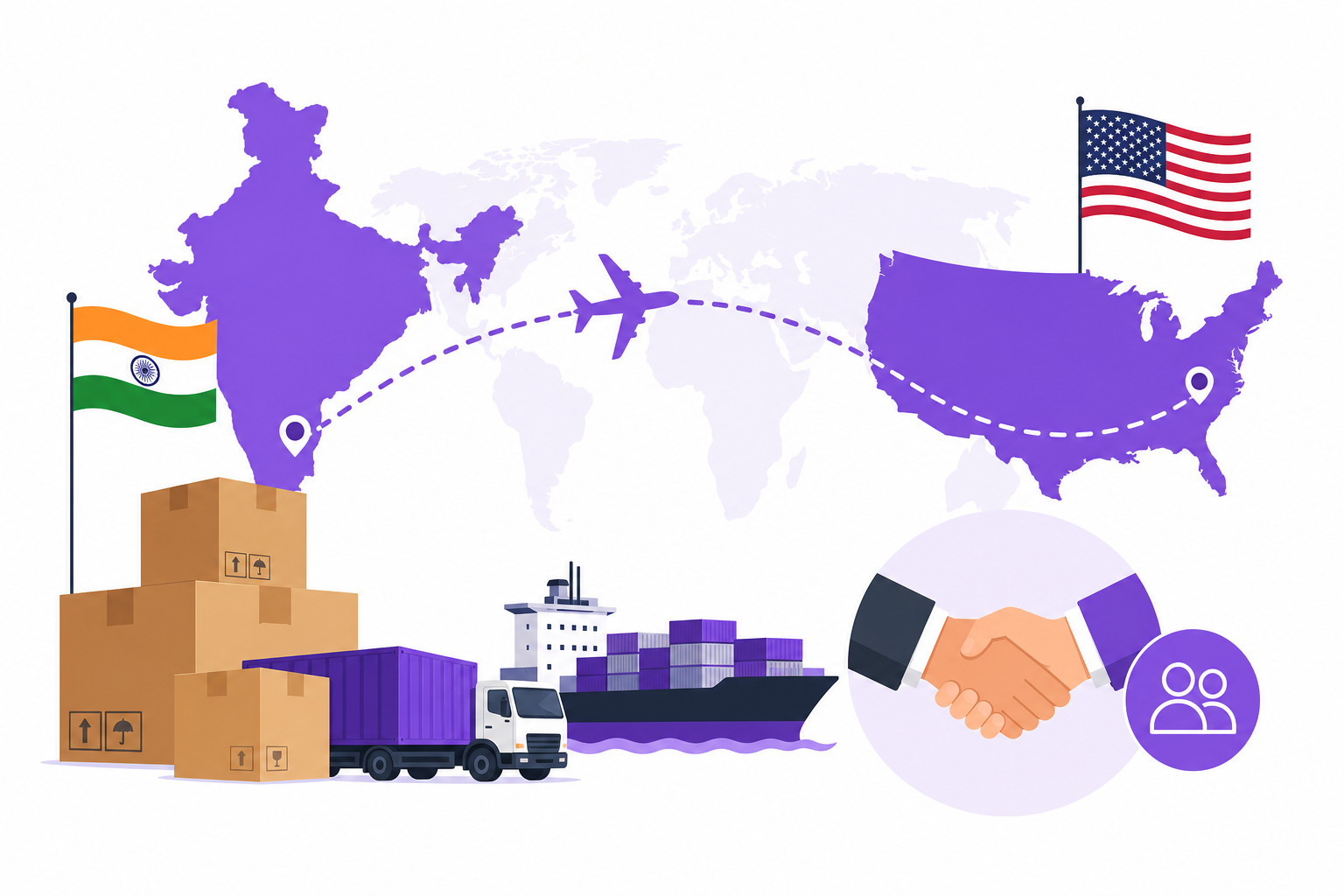
India and the United States share one of the world's largest bilateral trade relationships. American importers actively source from India across multiple sectors:
- Textiles, apparel, and home furnishings
- Pharmaceuticals and nutraceuticals
- Engineering goods and auto components
- Spices, rice, processed foods, and organic products
- Leather goods and handicrafts
- Chemicals, dyes, and specialty materials
- IT services and software (B2B)
- Industrial machinery and equipment
The opportunity is substantial—but so is competition from China, Vietnam, Bangladesh, Mexico, and other exporting nations. Indian exporters who target the right buyer segments with credible positioning win disproportionate share.
Define Your Ideal U.S. Buyer Profile
Before searching for American importers, clarify who you want to sell to. A U.S.-focused export ICP typically includes:
- Product category and specifications
- Buyer type: importer, distributor, wholesaler, retailer, private-label brand, or manufacturer
- Company size (SME vs enterprise)
- Geographic focus within the U.S. (coastal ports, Midwest distribution hubs, etc.)
- Import volume and reorder frequency
- Certification requirements (FDA, USDA, GMP, organic, Fair Trade)
- Price positioning (value, mid-market, premium)
Use our ICP identification guide and AI ICP generator to build a profile before prospecting.
Common U.S. Buyer Types for Indian Products
- Importers — Purchase directly from overseas suppliers for resale
- Distributors — Stock and distribute to retailers or other businesses
- Wholesalers — Sell in bulk to retailers, restaurants, or institutions
- Private-label brands — Source products under their own brand name
- Retail chains — Source directly or through approved vendor programs
- E-commerce brands — Import for direct-to-consumer sales
- Food service companies — Source ingredients and supplies at scale
Understand U.S. Compliance and Documentation
American buyers expect suppliers to understand regulatory requirements. Non-compliance is one of the fastest ways to lose a deal.
Key Compliance Areas by Product Category
- Food and agriculture — FDA registration, FSMA compliance, labeling requirements, USDA standards for organic products
- Pharmaceuticals — FDA approval pathways, GMP certification, DMF filings
- Textiles — Fiber content labeling, flammability standards, CPSIA for children's products
- Electronics and machinery — FCC, UL, and safety certifications
- Chemicals — TSCA compliance, SDS documentation
- Leather and handicrafts — Lacey Act compliance for certain materials
Highlight relevant certifications in outreach and on your export website. Buyers filter suppliers quickly based on compliance readiness.
10 Proven Ways to Find USA Buyers for Indian Products
1. Use AI to Discover American Importers
AI-powered platforms identify U.S. companies importing products in your category and match them to your ICP. This is the fastest scalable method for building qualified prospect lists. See AI tools to find importers and best lead generation tools for export business.
2. Target Procurement Decision-Makers
American B2B buying involves multiple stakeholders. Target:
- Procurement Manager
- Sourcing Manager
- Import Manager
- Category Manager
- Purchasing Director
- Supply Chain Manager
- Vendor Development Manager
Generic sales@ emails rarely reach these contacts. Use verified business emails and LinkedIn. Read how to find decision-makers for B2B sales.
3. Leverage Indian Government Export Programs
Organizations like APEDA, EEPC India, Pharmexcil, and FIEO offer buyer-seller meets, trade delegations, and market intelligence for U.S. export. Participate in India-U.S. trade missions and virtual buyer-seller programs.
4. Attend U.S.-Focused Trade Shows
Major American trade fairs attract importers evaluating new suppliers. Examples vary by industry—MAGIC for apparel, Natural Products Expo for food and wellness, Pack Expo for packaging, and sector-specific engineering exhibitions.
Prepare product samples, compliance documentation, and follow-up systems before attending.
5. Build a Credible Export Website
U.S. buyers research suppliers online before responding. Your website should include:
- Product catalog with specifications
- Export experience and countries served
- Certifications and compliance documentation
- Factory capabilities and capacity
- Case studies and client references
- Clear contact information and inquiry forms
6. Use LinkedIn for U.S. Buyer Prospecting
Search for sourcing and procurement professionals at target American companies. Filter by industry, company size, and geography. Combine connection requests with personalized email follow-up referencing their product lines.
7. Segment Outreach by Industry
Indian textile exporters should not use the same messaging as spice exporters or engineering companies. Segment campaigns by:
- Product category
- Buyer type (importer vs retailer vs food service)
- Geographic region within the U.S.
- Company size
Industry-specific guides like lead generation for textile exporters provide tailored frameworks.
8. Personalize Every Outreach Email
American buyers receive hundreds of supplier pitches weekly. Stand out by referencing:
- Their product range or retail categories
- Specific import needs your products address
- Relevant certifications you hold
- How your manufacturing capacity matches their volume requirements
Personalized emails consistently outperform generic "we are a leading manufacturer" templates.
9. Offer Samples and Pilot Orders
U.S. buyers often request samples before committing to volume orders. Build sample programs with clear MOQs, lead times, and shipping terms. Pilot orders reduce buyer risk and accelerate trust.
10. Follow Up Consistently
Most American buyers do not respond to the first email. A structured follow-up sequence might include:
- Introduction with product overview
- Company profile and certifications
- Product catalog or spec sheets
- Case study or reference
- Sample offer or virtual meeting invitation
- Final check-in before pausing outreach
High-Demand Indian Product Categories in the U.S.
Textiles and Apparel
India is a major supplier of cotton fabrics, garments, home textiles, and technical textiles. Target fashion brands, apparel importers, hotel supply companies, and e-commerce brands. See lead generation for textile exporters.
Spices and Food Products
American demand for Indian spices, basmati rice, tea, organic foods, and ethnic ingredients continues to grow. Target food distributors, ethnic grocery chains, restaurant supply companies, and health food retailers.
Pharmaceuticals and Nutraceuticals
Indian pharma companies supply APIs, generics, and nutraceutical ingredients. U.S. buyers include pharmaceutical distributors, supplement brands, and contract manufacturers. See lead generation for pharma manufacturers.
Engineering and Industrial Products
Auto components, castings, forgings, pumps, valves, and industrial equipment from India serve American manufacturers and distributors. Target procurement teams at OEMs and industrial supply companies.
Handicrafts, Leather, and Gifts
Indian handicrafts, leather goods, and gift items appeal to specialty retailers, museum shops, and e-commerce brands focused on artisan products.
U.S. vs Europe: Where Should Indian Exporters Focus?
Many Indian exporters expand to both markets. The U.S. offers large volume and faster decision cycles in some sectors; Europe offers premium pricing in others but stricter compliance. Compare strategies in how to find Europe importers and prioritize based on your product category and certification readiness.
Common Mistakes Indian Exporters Make with U.S. Buyers
- Sending generic mass emails without U.S.-specific personalization
- Ignoring FDA, USDA, or industry-specific compliance requirements
- Targeting retailers when they should target importers or distributors
- Quoting prices without understanding landed cost and Incoterms
- Failing to follow up after initial contact
- Using outdated or unverified contact data
- Not segmenting outreach by product category or buyer type
How Adsaga.ai Helps Indian Exporters Find U.S. Buyers
Adsaga.ai is an AI-powered B2B lead generation platform that helps Indian exporters discover qualified American importers, distributors, and procurement teams.
Instead of manually researching thousands of U.S. companies, Adsaga.ai analyzes your Ideal Customer Profile and identifies businesses that import products matching your offerings—with verified decision-maker contacts.
With Adsaga.ai, Indian exporters can:
- Discover U.S. importers and distributors by product category
- Find verified procurement and sourcing decision-makers
- Build targeted American prospect lists in minutes
- Prioritize high-fit buyers with AI-powered ICP scoring
- Reduce manual research across the U.S. market
- Scale outreach campaigns for textiles, food, pharma, engineering, and more
Whether you are a first-time exporter to the United States or scaling an existing American customer base, Adsaga.ai helps your team connect with buyers most likely to convert.
Frequently Asked Questions
How can Indian exporters find USA buyers in 2026?
Define your U.S. buyer ICP, use AI platforms to discover American importers matching your products, target verified procurement decision-makers, personalize outreach, ensure compliance documentation is ready, and follow up consistently across segmented campaigns.
What types of U.S. companies buy Indian products?
Importers, distributors, wholesalers, private-label brands, retail chains, e-commerce brands, food service companies, and manufacturers sourcing components or ingredients from India.
Do Indian exporters need FDA approval to sell in the USA?
It depends on the product category. Food, pharmaceuticals, cosmetics, and medical devices have specific FDA requirements. Understand and document compliance for your category before outreach—U.S. buyers expect this.
Can AI help Indian exporters find American importers?
Yes. AI tools identify U.S. companies importing products in your category, match them to your ICP, and provide verified procurement contacts. See AI tools to find importers and AI lead generation for exporters.
Which Indian export products have the most demand in the USA?
High-demand categories include textiles and apparel, spices and food products, pharmaceuticals and nutraceuticals, engineering goods and auto components, leather and handicrafts, and IT services.
Final Thoughts
Finding USA buyers for Indian products is achievable for exporters who combine market knowledge, compliance readiness, and systematic prospecting. The American market rewards suppliers who understand buyer needs, reach the right procurement contacts, and deliver credible product positioning—not those who send generic emails to random company lists.
Indian exporters who define a clear U.S. buyer ICP, leverage AI for importer discovery, and invest in personalized outreach build predictable pipelines that trade fairs and marketplaces alone cannot provide.
Ready to find qualified American buyers? Get started with Adsaga.ai or explore more export guides on the Adsaga blog.