
Finding overseas buyers is one of the biggest challenges every exporter faces. Whether you sell textiles, chemicals, pharmaceuticals, engineering goods, food products, or industrial equipment, consistent international demand does not appear on its own—you need a repeatable system to discover importers, distributors, and procurement teams that genuinely need your products.
Many exporters still depend on trade fairs, B2B marketplaces, buying agents, and referrals. These channels can work, but they are often expensive, slow, and impossible to scale when you want to enter new countries or product categories.
In 2026, the most successful export businesses combine traditional relationship-building with modern prospecting: clearly defined Ideal Customer Profiles, verified decision-maker data, personalized outreach, and AI lead generation software built for exporters.
This complete guide explains how exporters can find overseas buyers step by step—from defining your target market to building a predictable international sales pipeline. For foundational concepts, see our guides on ICP identification, AI ICP generation, and B2B sales prospecting.
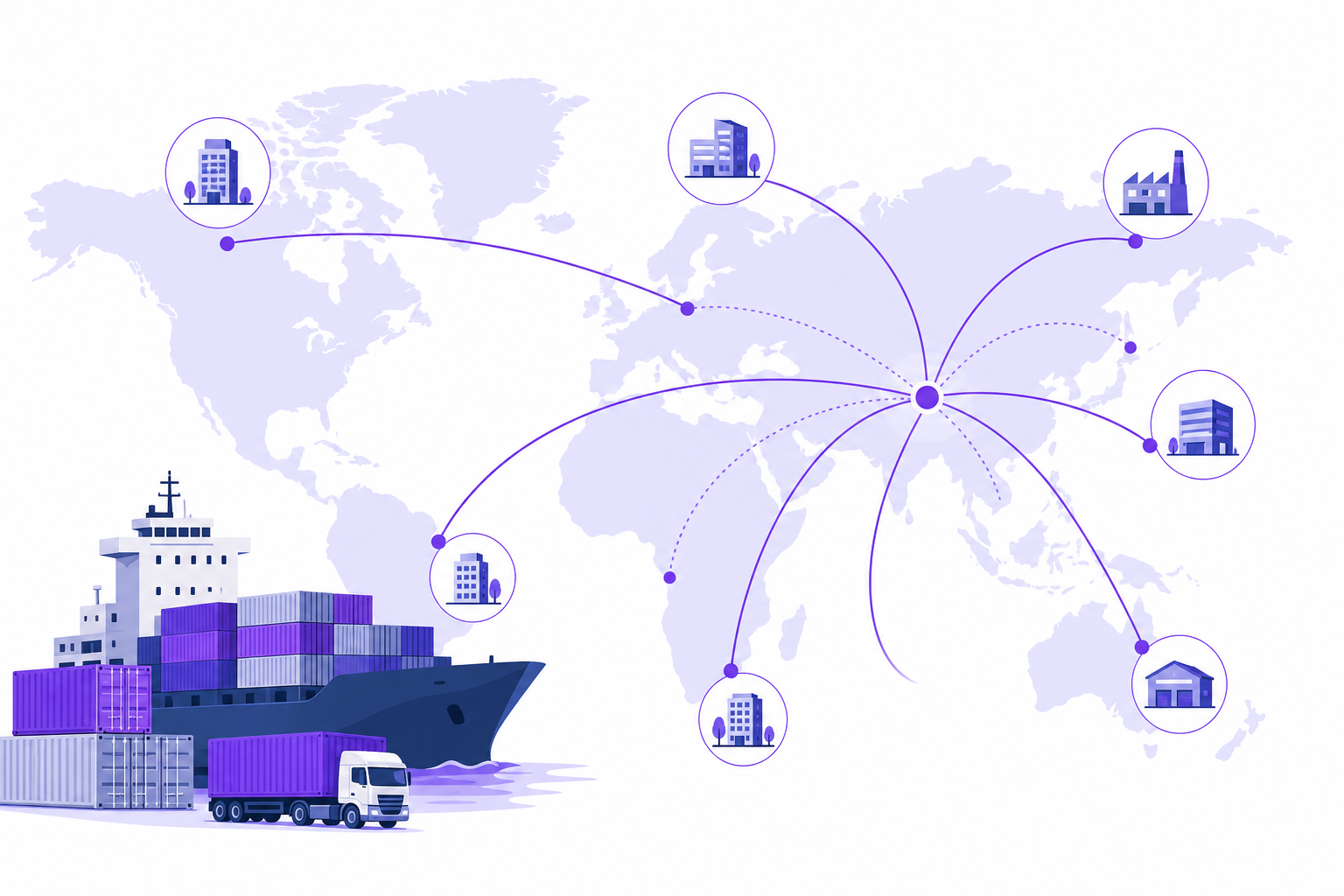
Why Finding Overseas Buyers Is Difficult for Exporters
Export sales are fundamentally different from domestic B2B sales. You are selling across borders, time zones, regulations, and cultural expectations—often to buyers you have never met in person.
Your ideal overseas customers may include:
- Importers and trading companies
- Distributors and wholesalers
- Retail chains and private label brands
- Manufacturers sourcing raw materials or components
- Government and institutional buyers
- E-commerce brands and D2C companies
- Project contractors and engineering firms
The challenge is not simply finding company names. Exporters need businesses that import products in their category, have budget and volume potential, and employ people who approve new supplier partnerships.
Common Mistakes Exporters Make When Searching for Buyers
Before exploring what works, it helps to understand what wastes time and budget:
- Buying generic contact databases with outdated emails
- Sending identical emails to thousands of companies
- Targeting the wrong buyer type (retailer vs. importer vs. manufacturer)
- Ignoring import activity and product relevance
- Relying only on exhibitions without follow-up systems
- Failing to define a clear Ideal Customer Profile
- Contacting generic info@ addresses instead of procurement teams
These mistakes lead to low reply rates, long sales cycles, and unpredictable revenue. A structured approach fixes most of them.
Step 1: Define Your Ideal Overseas Buyer Profile
Every effective export prospecting strategy starts with clarity. Before searching for buyers, document exactly who you want to reach.
Your Ideal Customer Profile (ICP) should include:
- Product category and specifications
- Target countries and regions
- Buyer type (importer, distributor, manufacturer, retailer)
- Company size and annual revenue range
- Import volume or order size expectations
- Required certifications or compliance standards
- Distribution model (wholesale, private label, OEM, project-based)
A well-defined ICP eliminates low-fit prospects early. Use our ICP identification guide and AI ICP generator guide to build yours faster.
Step 2: Choose the Right Overseas Markets
Not every country is equally attractive for every product. Prioritize markets based on demand, competition, tariffs, logistics, and your competitive advantages.
High-potential export destinations in 2026 include:
- United States — large import market across consumer and industrial categories. See how to find USA buyers for Indian products.
- Europe (Germany, UK, Netherlands, France, Italy, Spain) — strong demand with strict compliance requirements. See how to find Europe importers.
- Middle East (UAE, Saudi Arabia) — growing import hubs for food, textiles, and industrial goods.
- Southeast Asia (Singapore, Malaysia, Vietnam) — manufacturing and re-export opportunities.
- Africa (South Africa, Nigeria, Kenya) — emerging demand in FMCG, pharma, and infrastructure.
- Australia and Canada — stable markets with strong procurement processes.
Start with two or three countries where your product has proven demand, then expand systematically.
Step 3: Identify the Right Decision-Makers
Overseas buyers rarely respond to emails sent to generic company inboxes. Successful exporters target professionals responsible for sourcing and supplier selection.
Key decision-makers include:
- Procurement Manager
- Purchase Manager
- Sourcing Manager
- Import Manager
- Category Manager
- Supply Chain Director
- Operations Manager
- CEO or Founder (for SMEs)
Reaching the right person dramatically improves response rates. Learn more in our decision-maker prospecting guide.
12 Proven Ways Exporters Find Overseas Buyers
1. Use AI-Powered Importer Discovery
Modern exporters use AI tools to find importers that match their product category, target country, and ICP. Instead of manually searching directories, AI analyzes business data to surface qualified prospects with verified contact information.
2. Attend International Trade Fairs Strategically
Trade shows remain valuable for relationship-building, but they work best when combined with pre-show prospecting and structured post-show follow-up. Research attendees and exhibitors before you arrive.
3. Leverage Export Promotion Councils and Government Resources
Many countries offer exporter support through trade bodies, market intelligence, and buyer-seller meets. Use these for market entry, not as your only lead source.
4. Build a Professional Export Website
International buyers research suppliers online before responding. Your website should showcase product catalogs, certifications, factory capabilities, export countries served, and case studies.
5. Use LinkedIn for B2B Prospecting
LinkedIn helps identify procurement professionals at target companies. Combine profile research with personalized connection requests and value-driven messaging—not mass spam.
6. Analyze Import Data and Trade Statistics
Customs and trade data reveal which companies import products similar to yours. This intelligence helps prioritize high-potential buyers over random outreach.
7. Partner with Local Distributors
Distributors with existing market presence can accelerate entry into new countries. Vet partners carefully and define territory, margins, and support expectations.
8. Run Targeted Email Outreach Campaigns
Email remains one of the most scalable channels for export prospecting. Personalize every message with product relevance, market insight, and a clear value proposition.
9. Publish Educational Export Content
Blog posts, product guides, and industry insights attract inbound interest from buyers searching online. Content marketing supports long-term SEO and credibility.
10. Segment Buyers by Industry
One-size-fits-all outreach underperforms. Segment prospects by industry—for example, textile exporters should target apparel brands separately from hotel supply companies and home furnishing importers.
11. Implement a Structured Follow-Up System
Most overseas buyers do not reply to the first email. Plan a sequence: introduction, product catalog, company profile, case study, sample offer, and meeting invitation.
12. Compare Lead Generation Tools
Evaluate platforms based on data quality, ICP matching, decision-maker coverage, and export market support. See our roundup of best lead generation tools for export business.
What Makes a High-Quality Overseas Buyer Lead?
A qualified export lead contains far more than a company name. The best prospects include:
- Company profile and website
- Country and address
- Industry and product focus
- Import activity or sourcing signals
- Company size and revenue estimate
- Decision-maker names and titles
- Verified business email addresses
- LinkedIn profiles
- ICP fit score
Better data leads to better conversations and faster deal closure. Learn how to validate prospects in our lead verification guide.
How to Build a Repeatable Overseas Buyer Discovery Process
Top exporters treat buyer discovery as a system, not a one-time activity:
- Define your ICP using product, market, and buyer-type criteria
- Select priority countries and industries
- Use AI and trade intelligence to build prospect lists
- Verify contacts and enrich company profiles
- Score leads by ICP fit and import relevance
- Personalize outreach by segment
- Follow up consistently across channels
- Track KPIs: replies, meetings, samples, and orders
- Refine targeting based on conversion data
- Scale successful campaigns to new markets
This workflow creates predictable pipeline growth instead of reactive scrambling for buyers.
Which Export Industries Benefit Most?
Structured overseas buyer discovery works across export sectors, including:
- Textile and apparel exporters
- Chemical manufacturers
- Pharmaceutical exporters
- Packaging companies
- Engineering goods exporters
- Industrial equipment suppliers
- Steel manufacturers
- Plastic manufacturers
Regardless of industry, the principles remain the same: define your buyer, find verified contacts, and execute personalized outreach at scale.
How Adsaga.ai Helps Exporters Find Overseas Buyers
Adsaga.ai is an AI-powered B2B lead generation platform designed to help exporters discover qualified international buyers faster.
Instead of generating generic contact lists, Adsaga.ai analyzes your Ideal Customer Profile and identifies companies that closely match your products, target industries, and export markets.
With Adsaga.ai, exporters can:
- Discover importers and distributors in target countries
- Find verified procurement decision-makers
- Build highly targeted overseas prospect lists
- Prioritize leads using AI-powered ICP scoring
- Reduce manual research across multiple markets
- Improve outreach quality and reply rates
- Build a predictable international sales pipeline
Whether you are entering the USA, Europe, Middle East, or Asia-Pacific, Adsaga.ai helps your export team focus on buyers most likely to become long-term customers.
Frequently Asked Questions
How do exporters find overseas buyers in 2026?
Define your Ideal Customer Profile, choose priority export markets, use AI-powered importer discovery and trade data, target verified procurement decision-makers, personalize outreach, and follow up consistently across segmented campaigns.
What is the fastest way to find international buyers?
AI lead generation software combined with a clear ICP is the fastest scalable approach. It automates company discovery, decision-maker identification, and lead prioritization—reducing weeks of manual research to hours.
Are trade fairs still effective for finding overseas buyers?
Yes, but they work best as part of a broader strategy. Combine exhibitions with pre-show prospecting, post-show follow-up, and ongoing digital outreach for consistent pipeline growth.
Who should exporters contact at overseas companies?
Target procurement managers, purchase managers, sourcing managers, import managers, category managers, supply chain directors, and CEOs or founders at smaller companies.
Can small exporters find overseas buyers without a large budget?
Yes. Start with one or two target markets, use AI tools to build focused prospect lists, personalize email outreach, and measure results before expanding. Quality targeting beats mass outreach every time.
Final Thoughts
Finding overseas buyers is no longer about collecting thousands of company names from directories. Success in 2026 comes from identifying importers and distributors that genuinely need your products, reaching verified decision-makers, and delivering personalized outreach that builds trust across borders.
Exporters who combine a clearly defined ICP with AI-powered prospecting, structured follow-up, and market-specific strategies can build predictable international pipelines—without relying solely on trade fairs or inbound inquiries.
If your export team spends more time searching for buyers than closing deals, investing in a smarter discovery process can become your strongest competitive advantage. Get started with Adsaga.ai or explore more export guides on the Adsaga blog.