
Distributors are the bridge between your factory and foreign markets. For many exporters, finding the right distribution partner is faster and more scalable than selling directly to hundreds of retailers. Yet how to find distributors worldwide remains one of the most common questions export sales teams ask—and one of the hardest to answer with outdated directories alone.
Whether you export consumer goods, industrial products, food items, textiles, chemicals, or machinery, the right distributor can provide local market knowledge, warehousing, sales teams, and regulatory expertise that accelerate international growth.
This guide explains how to identify, evaluate, and approach distributors worldwide in 2026—with practical methods, decision-maker targeting, and AI-powered research to build a reliable partner pipeline.
For related strategies, see how exporters find overseas buyers, export lead generation strategies, and ICP identification.
Why Distributors Matter for Export Growth
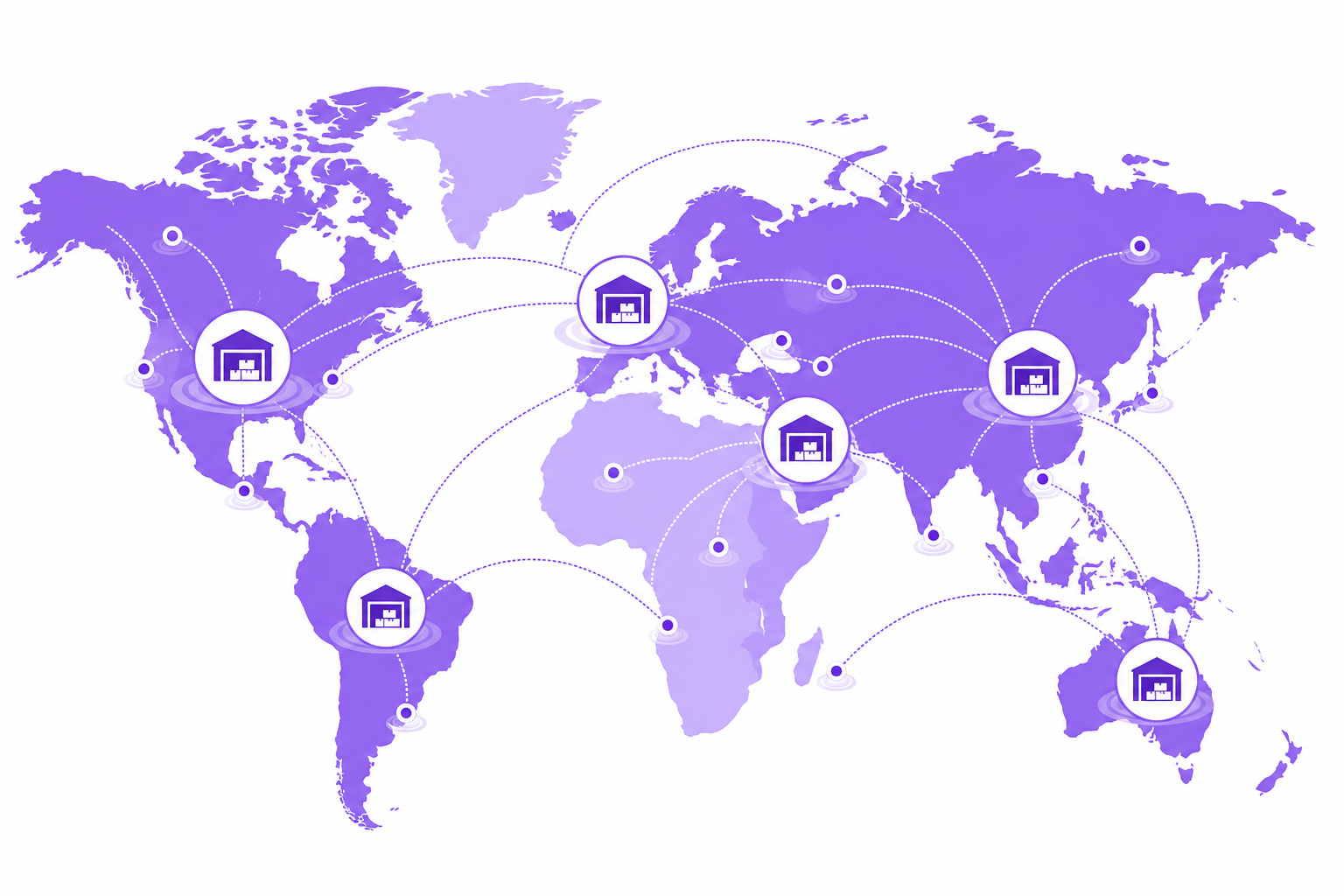
Distributors purchase products from exporters and resell them within a defined territory or market segment. Partnering with the right distributor offers several advantages:
- Immediate access to established retail and wholesale networks
- Local inventory, logistics, and customer support
- Market knowledge and regulatory compliance expertise
- Faster market entry without building a local sales office
- Shared marketing and promotional investment
- Reduced complexity in managing hundreds of small accounts
For exporters without the resources to sell directly in every country, distributors are often the most efficient path to international scale.
Types of Distributors Exporters Should Know
Not all distributors serve the same function. Understanding types helps you target the right partners:
Exclusive Territory Distributors
Hold exclusive rights to sell your products within a country or region. Best for exporters seeking a committed long-term partner with deep market investment.
Non-Exclusive Distributors
May carry competing brands alongside yours. Suitable when you want broader coverage quickly, though partner motivation may vary.
Specialty Distributors
Focus on a specific product category—pharmaceuticals, industrial equipment, food service, or technical textiles. Often deliver higher expertise and buyer relationships.
Master Distributors
Manage sub-distributors or dealers within a large geography. Common in markets with diverse regional demand.
Online and E-Commerce Distributors
Specialize in digital channels, marketplaces, and direct-to-consumer fulfillment. Increasingly important for consumer and specialty products.
Define Your Ideal Distributor Profile
Before searching globally, document what your ideal distribution partner looks like. Consider:
- Target countries and territories
- Product categories they should already carry
- Minimum annual purchase volume
- Warehouse and logistics capabilities
- Sales team size and channel coverage
- Certifications required in their market
- Financial stability and business tenure
- Brand positioning (premium, mid-market, value)
This distributor ICP becomes your filter for prospecting and evaluation. Use our ICP guide and AI ICP Generator to formalize criteria quickly.
10 Proven Ways to Find Distributors Worldwide
1. Use AI-Powered B2B Prospecting
AI platforms can identify companies that match your distributor ICP by analyzing industry, product focus, geography, and company size—far faster than manual directory searches. Explore AI lead generation for exporters and AI tools to find importers, which also surface distribution companies.
2. Analyze Competitor Distribution Networks
Research which distributors carry similar products in your target markets. Competitor websites, product labels, trade publications, and retailer listings often reveal active channel partners worth approaching.
3. Search Trade Directories and Industry Associations
Sector-specific associations and verified trade directories list distributors by category and country. Cross-reference every contact with current website and LinkedIn data before outreach.
4. Attend International Trade Shows Strategically
Industry exhibitions attract distributors actively seeking new product lines. Pre-schedule meetings, collect qualified contacts, and follow up within 48 hours with personalized proposals.
5. Leverage LinkedIn for Distributor Research
Search for companies with titles such as Distribution Manager, Business Development Director, or Category Manager in your target geography. LinkedIn helps validate company activity and identify decision-makers.
6. Explore Government and Chamber Resources
Export promotion agencies, chambers of commerce, and trade missions often maintain distributor databases or facilitate introductions in priority markets.
7. Monitor Import and Trade Data
Companies with consistent import activity in your product category are strong distributor candidates. Trade intelligence signals active sourcing behavior.
8. Request Referrals from Existing Partners
Current distributors may recommend partners in adjacent territories or complementary categories. Warm introductions convert at higher rates than cold outreach.
9. Publish Partner-Focused Content
Create content aimed at potential distributors—margin structures, territory opportunities, product training resources, and success stories. Inbound interest from qualified partners reduces prospecting cost.
10. Build a Structured Outreach Campaign
Approach distributors with tailored messages explaining market opportunity, product differentiation, support you provide, and terms that make partnership attractive. See export prospecting guide for workflow details.
Who to Contact at Distribution Companies
Distributor partnerships are typically approved by senior commercial leaders. Target:
- Business Development Director
- Category Manager
- Procurement Director
- Import Manager
- Managing Director or CEO (for mid-size firms)
- Product Manager for your category
Reaching the right person accelerates evaluation and contract discussions. Read how to find decision-makers and how AI finds B2B decision-makers.
How to Evaluate Distributors Before Signing
Not every interested distributor is the right partner. Evaluate prospects on:
- Market coverage: Do they reach your target retailers, wholesalers, or end users?
- Portfolio fit: Do they carry complementary—not competing—brands?
- Financial health: Can they meet MOQs and payment terms reliably?
- Operational capacity: Warehousing, logistics, and after-sales support
- Sales capability: Field team, digital presence, and promotional activity
- Regulatory compliance: Licenses and certifications for your product category
- Strategic alignment: Shared goals for growth, marketing, and brand positioning
Request references, visit facilities when possible, and start with trial orders or limited territories before granting exclusivity.
Best Markets for Finding Distributors in 2026
Priority markets depend on your product, but exporters commonly seek distributors in:
- North America: United States and Canada — see finding USA buyers
- Europe: Germany, UK, France, Netherlands, Italy — see finding Europe importers
- Middle East: UAE and Saudi Arabia for re-export and regional distribution
- Asia-Pacific: Australia, Singapore, and Southeast Asian hubs
- Africa: South Africa and growing regional distribution networks
Start with one or two high-potential markets rather than spreading efforts too thin.
Outreach Best Practices for Distributor Recruitment
When contacting potential distributors, include:
- Clear product overview and unique selling points
- Target market opportunity in their territory
- Margin structure and commercial terms (outline)
- Marketing and training support you provide
- Export credentials, certifications, and production capacity
- Case studies or reference markets
- Next step: catalog, sample, or discovery call
Avoid generic supplier pitches. Distributors evaluate dozens of brands—show why yours fits their portfolio and growth strategy.
Common Mistakes When Searching for Distributors
- Granting exclusivity without performance milestones
- Choosing distributors based on enthusiasm alone, not capability
- Ignoring conflict with competing brands in their portfolio
- Failing to verify financial stability and import history
- Using outdated contact lists without role verification
- Neglecting ongoing partner support after signing
Strong distributor relationships require selection discipline and continuous engagement—not just a signed agreement.
How Distributor Search Fits Your Export Stack
Finding distributors works best alongside broader export lead generation. Combine this guide with:
- Export lead generation strategies
- Finding wholesale buyers
- Best lead generation tools for export business
- Verifying leads before outreach
- Industry guides (e.g., textile exporters)
Frequently Asked Questions
How do I find distributors for my product internationally?
Define your ideal distributor profile, use AI prospecting and trade intelligence to identify companies in target markets, verify decision-makers, evaluate portfolio fit and capabilities, then run personalized outreach campaigns with clear partnership proposals.
What is the difference between a distributor and an importer?
Importers bring products into a country; distributors actively sell and market those products through established channels. Many distributors also act as importers, but not all importers have distribution infrastructure.
Should I offer exclusive or non-exclusive distribution rights?
Exclusive rights motivate deeper investment but require performance milestones and territory protection. Non-exclusive arrangements offer faster coverage but less partner commitment. Many exporters start non-exclusive and grant exclusivity after proven sales results.
Can AI help find distributors worldwide?
Yes. AI platforms identify distribution companies by product category, geography, and firmographics, surface verified contacts, and score ICP fit—reducing weeks of manual research to hours.
Which countries are best for finding export distributors?
High-potential markets include the United States, Germany, UK, UAE, Australia, and Singapore—though the best choice depends on your product category, certifications, and channel strategy.
Final Thoughts
Finding distributors worldwide is a strategic process—not a one-time directory search. Exporters who define their ideal partner profile, use modern prospecting tools, evaluate candidates carefully, and invest in long-term relationships build channel networks that compound over years.
The right distributor accelerates market entry, local credibility, and revenue growth. The wrong partner drains resources and damages brand reputation. Take time to prospect deliberately, verify contacts, and structure partnerships with clear expectations on both sides.
Start with one priority market, build a shortlist of qualified distributors, and run a focused outreach campaign. Scale what works. Get started with Adsaga.ai or browse more export resources on the Adsaga blog.
How Adsaga.ai Helps Exporters Find Distributors
Adsaga.ai helps export businesses discover qualified international partners—including distributors, importers, and wholesalers—using AI-powered ICP matching.
With Adsaga.ai, you can:
- Identify distribution companies by country, industry, and product category
- Find verified business development and procurement decision-makers
- Build targeted distributor prospect lists with ICP scoring
- Reduce manual research across multiple export markets
- Improve outreach to the partners most likely to represent your brand
Whether you are launching in a new territory or expanding your existing channel network, Adsaga.ai helps your team find distributors worldwide with greater speed and accuracy. Try Adsaga.ai alongside the strategies in this guide.